
Kitchen / Everyday decisions
Your kitchen counter is prime property. What deserves a permanent address?
The kettle has a job. The toaster has a following. The juicer is apparently holding the corner until its next appearance, which may coincide with a change of government.
Meanwhile, you are chopping an onion on the bit of counter left between them.
A kitchen counter has two jobs that occasionally argue: keeping useful things within reach and giving you somewhere to work. The answer is not to hide everything. It is to give the best positions to the things that make your actual day easier—and leave enough room to do what you came into the kitchen to do.
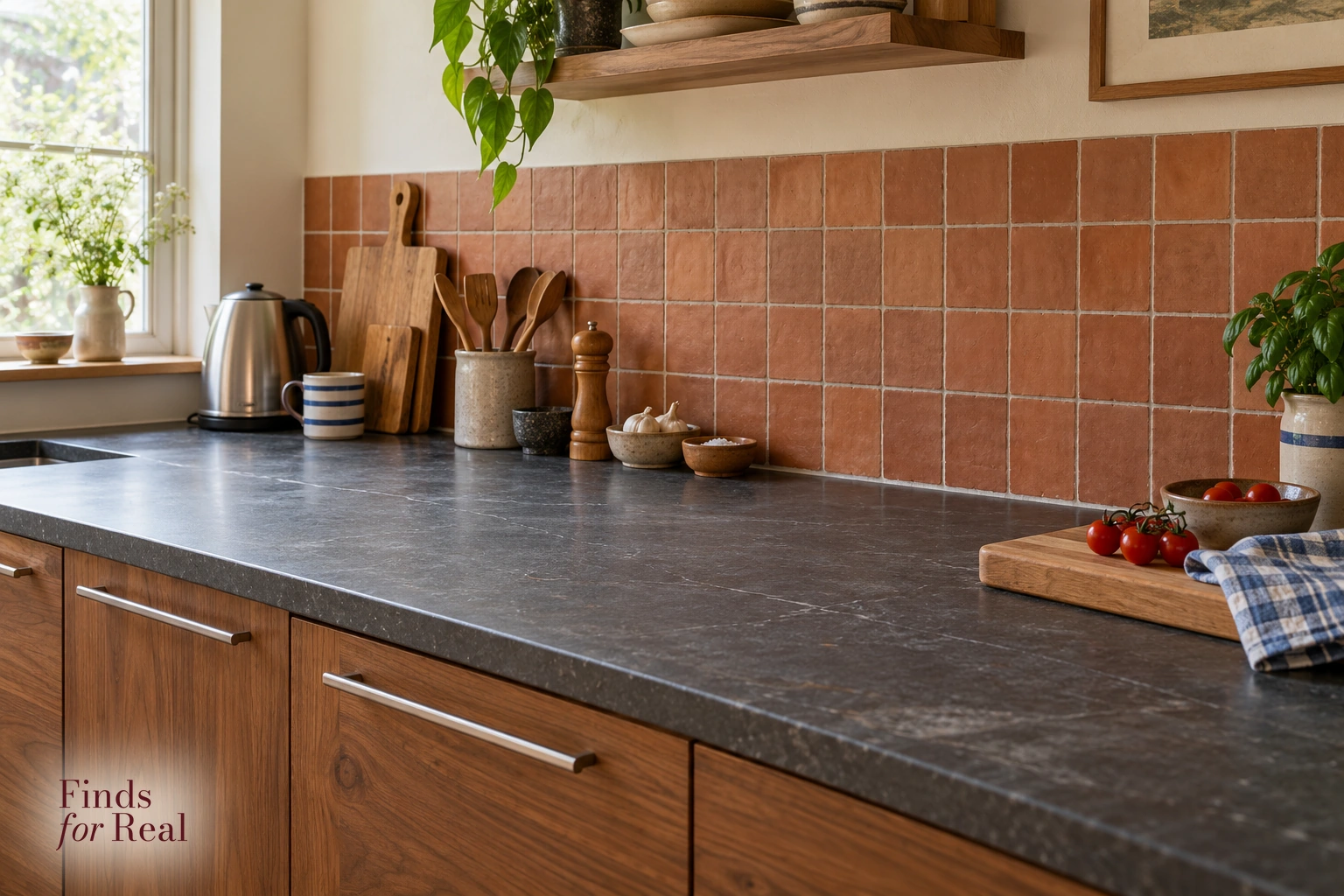
Give the chopping board first refusal
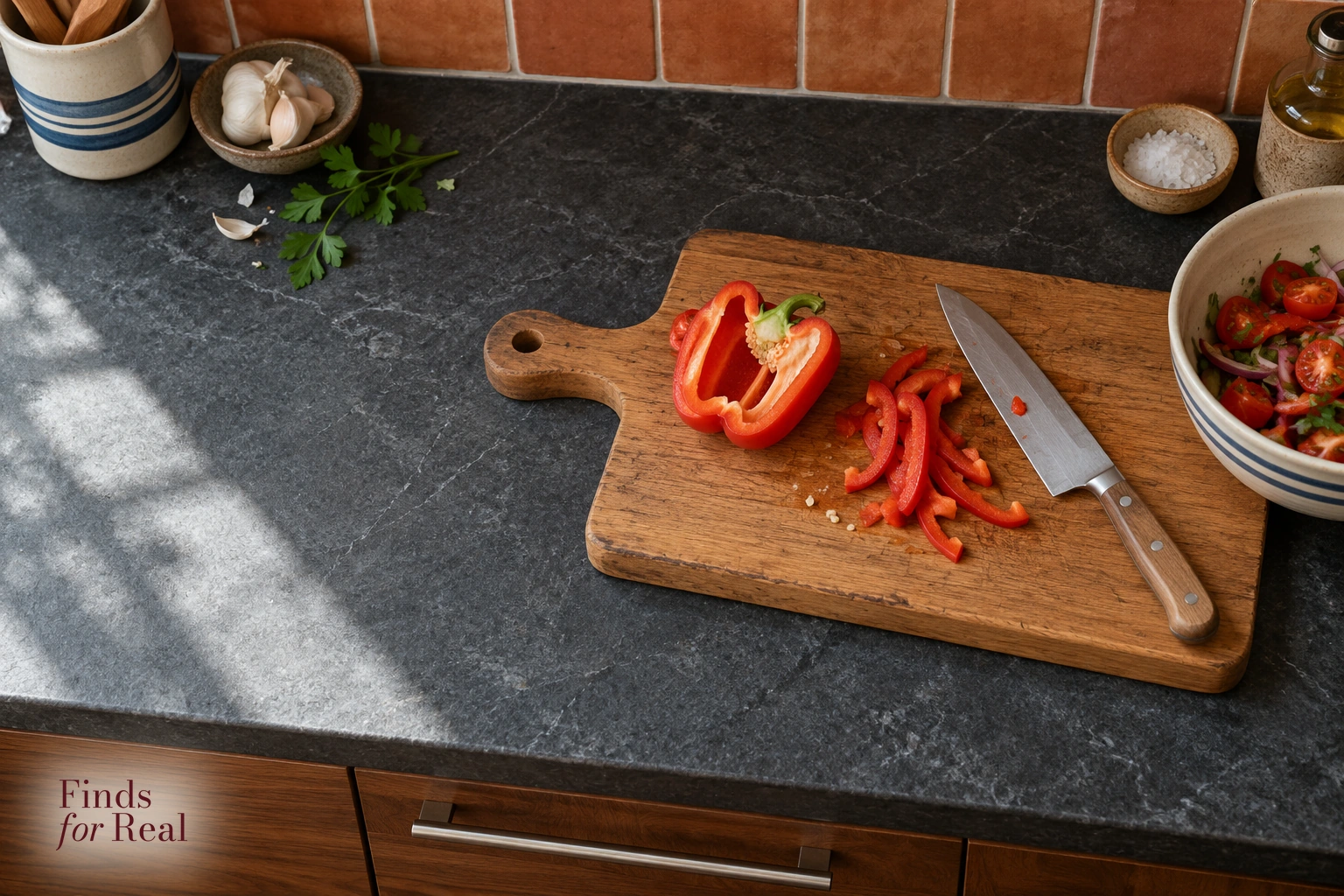
Before deciding which appliances stay out, put down the board you normally use. Add a bowl for ingredients and a plate for what comes next. Can you work there without relocating the coffee station?
A few empty gaps between machines may look like spare space. A continuous stretch where you can set things down is more useful. It gives a grocery bag somewhere to land, lets a mixing bowl sit beside the board and makes it possible to prepare a meal without balancing ingredients behind your elbow.
Protect that stretch first. It does not need to look empty all day; it needs to be available when you need it. If every dinner starts with moving the same three objects, those objects have acquired a better address than dinner.
Daily use is a good argument. So is an awkward lift.
The kettle you use every morning has a straightforward claim. So might a toaster used by three people, or a coffee setup that gets you out the door. Keeping them accessible is the point of owning them.
But frequency is not the only way to earn a place. A machine used on Saturdays may deserve to stay out if getting it from a low cupboard is difficult. Weight, grip, reach and the effort of setting up all belong in the decision. A clear counter that makes an ordinary task harder is an expensive kind of neatness.
Try a more useful question than “Do I use it every day?” Ask: “What becomes harder if this lives somewhere else?” If the answer is a difficult lift or a routine you would abandon, convenience has made its case. If the answer is opening a nearby drawer once a month, the cupboard looks promising.
Store it nearby, rather than sending it into exile
Putting something away works better when away is a sensible place.
An occasional citrus press can live on an easy shelf close to the preparation area. A hand mixer can share a reachable home with its beaters. The point is to make the next use straightforward, not to win a contest for the deepest cupboard.
If an appliance only fits behind two pans and a serving platter, you have found a hiding place, not a useful home. Before buying storage to solve that problem, try the shelf you already have. Check that you can remove the item without unloading everything around it. Keep the things needed for the task together where practical.
A tool can be worth owning without deserving permanent counter space. That is especially true when it does one occasional job well and is easy to retrieve.
Getting equipment out is one part of the deal. Our guide to the hidden chore behind time-saving appliances follows the washing, drying and other work around each use.
Follow the route from ingredients to plate
Set up for one ordinary meal and notice where your hands keep going.
The chopping board, bowl and utensils need a workable relationship. So do the kettle, mugs and tea. A breakfast corner may make life easier when it sits outside the place where someone else prepares lunch. The right grouping follows the task; it does not have to follow matching finishes.
Keep the edge of the counter useful for setting things down. Avoid making someone reach across your active preparation area just to get a mug. In a shared kitchen, ask the other person where they repeatedly have to wait or move something. That small negotiation may do more than another countertop organizer.
A tray can help gather a few things you use together. It can also turn three movable objects into one large obstacle. Put the proposed tray down before buying it. If the whole arrangement still has to move before you can cook, containing it has not solved the location.
Pretty is allowed. Permanent still needs a reason.
You are allowed to enjoy seeing your kitchen things. A favorite bowl, a handsome mixer or the mug you always reach for can make the room feel like yours. There is no requirement to live inside an empty rental photograph.
The trade-off gets clearer when you choose what you want to see. One piece you love can have a deliberate place. A row of objects kept out because none has another home is a storage decision that happened by default.
If the view feels busy, try grouping the things that perform one task and putting occasional extras nearby. You may prefer that arrangement even with exactly the same number of useful objects. Visual calm is a preference, not a test of how well you run a home.
Before buying another resident, name its address
A new appliance needs a job and somewhere to do it. Decide both before ordering.
If it will stay out, identify the space it gets and what moves. Will dinner still have a preparation area? If it will be stored, choose the actual shelf and consider getting it out when you are tired. “In the cupboard” is not a complete plan if that cupboard already contains the slow cooker.
Then compare the purchase with what you own. A stick blender may cover an occasional soup task without a jug blender becoming a permanent resident. A hand mixer may suit occasional cakes; regular baking and a difficult lifting routine may give a stand mixer a stronger claim. These are different use patterns, not a ranking of serious and unserious cooks.
For a specific mixer decision, our KitchenAid Artisan in Honey guide explains the bowls and tools in that kit. Decide which of them you would use before making room for all of them. If you are comparing air fryers, our Ninja AF400ME guide looks at the two-drawer arrangement and who it suits. Neither is a universal answer to a crowded counter.
A permanent address must also suit the appliance's instructions. A shelf that works for storage may not be a place where you can operate it. Check the exact model's placement guidance before settling it in; a convenient corner does not overrule the manual.
If you are still deciding how much appliance to buy, Before you buy the bigger one looks at capacity alongside the space needed to use it.
Try the arrangement before buying the organizer
For the next week, pay attention to what you move before making food. Put one occasional item in an easier storage spot. Give one regularly used thing a better position. Keep the preparation stretch available and see what happens during your normal meals.
This is a household experiment, not a rule that seven days can judge every appliance. Keep the occasional tool you value. Give difficult-to-lift equipment a fair hearing. Change a placement that annoys you even if it looks excellent in a photograph.
The best counter is the one where the things you need are easy to reach and there is still somewhere to make lunch. Everything else can negotiate.
A few useful questions
Should every daily appliance stay out?
Daily use is a strong reason, but consider the people and tasks sharing the surface. A reachable cupboard may suit a small tool; an awkward or heavy item may need a permanent position. Protect a usable preparation area alongside convenience.
Is a countertop organizer the answer?
Only if it improves access or the arrangement. Test its footprint with what you already have. If it blocks preparation space or creates another thing to move, choose a different location before buying it.
Do I need to get rid of things I rarely use?
No. Keeping a useful occasional tool and leaving it on the counter are separate decisions. Give it a reachable storage home if you can, and judge its value by the job it does for you.