
Home / Editorial guide
The hidden chore behind every ‘time-saving’ appliance
Dinner is on the plate. The floor looks respectable. The smoothie has been dispatched. Somewhere just outside the frame, a basket is soaking, a filter is drying and a collection of attachments is waiting to be reunited with its cupboard.
Convenience has a second shift.
That does not make the appliance a bad purchase. A machine can take a genuinely tedious job off your hands and still need looking after. The useful question is whether the whole routine—from getting it out to putting it away—feels easier than the one it replaces.
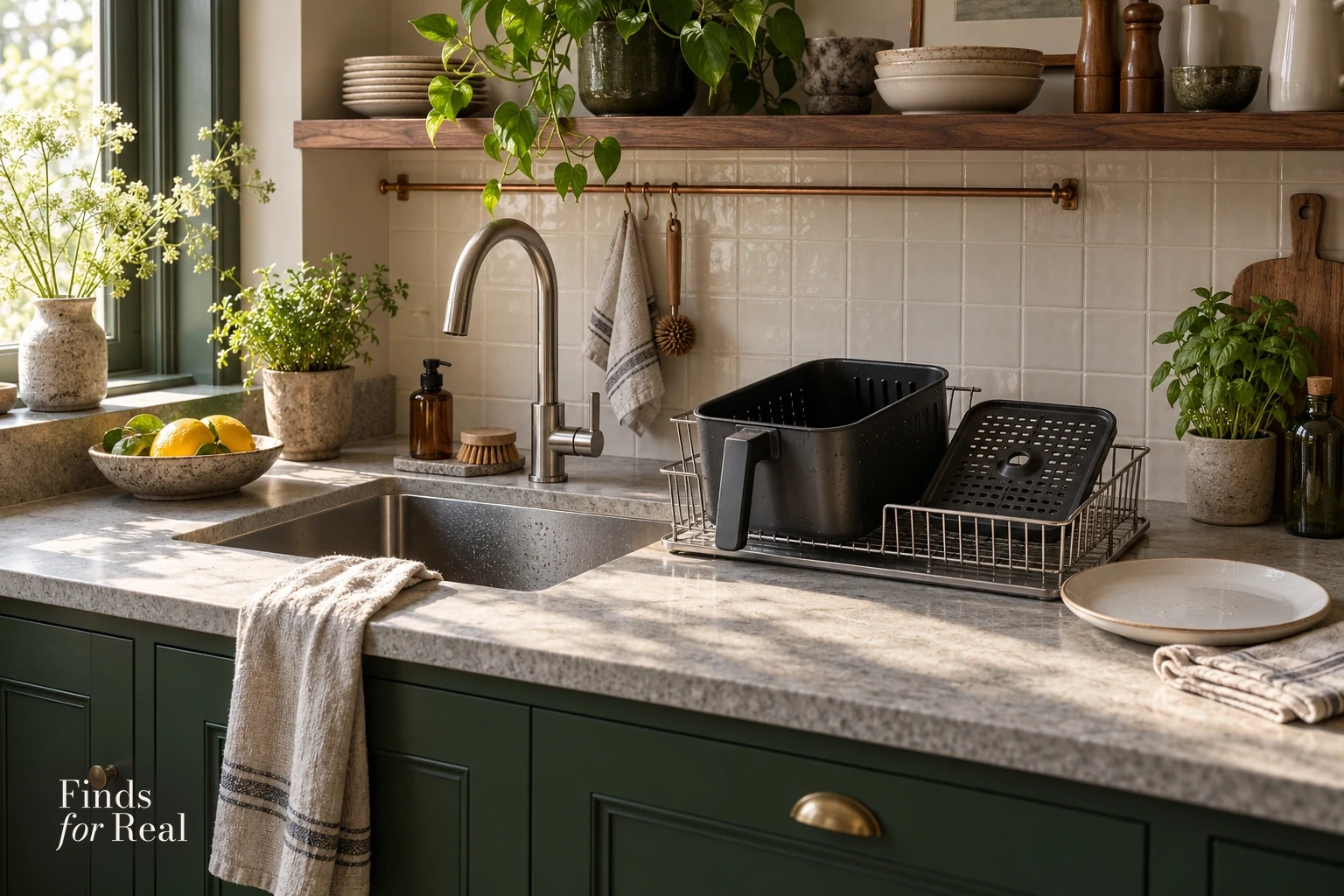
The job isn’t finished when the machine stops
An appliance demonstration usually ends at the satisfying moment: the food comes out, the crumbs disappear, the ingredients turn silky. Your evening continues past the edit.
There may be removable parts to wash, a surface to wipe, pieces to leave out until dry and a bulky object to put somewhere. Less frequent jobs arrive later: checking a filter, descaling, ordering a compatible replacement. None is automatically a deal-breaker. Together, they describe the purchase more honestly than the convenient bit alone.
It helps to separate hands-on work from waiting. Scrubbing a part requires your attention. Leaving a clean component to air-dry may require very little attention, but it still needs space and can delay the next use. Five awkward pieces can feel more demanding than one large, straightforward bowl. The shape of the chore matters as much as its duration.
Washing: count the parts you’ll actually use
“Dishwasher safe” is useful information. It does not load the dishwasher, find a space for the basket or put anything away afterward.
For air fryers, check the removable parts and the cleaning method for the exact model. The Ninja AF400ME manual, for example, recommends hand washing its drawers to extend their life and says to air-dry or towel-dry hand-washed parts after use. It also says not to immerse the main unit in liquid. Let it cool before cleaning. Those are instructions for this model—not permission to treat every air fryer the same way.
The practical judgment comes next. If your ordinary meal uses one basket instead of several pieces of cookware, the cleanup may be a perfectly good exchange. If the appliance adds another container to a meal you would otherwise make in one pan, the equation changes. Compare it with your actual fallback dinner, rather than an imaginary kitchen in which everything is cooked from scratch in six pans.
Stand mixers offer a different lesson: parts that arrive in the same box may need different care. KitchenAid says attachment materials matter. Coated and stainless steel beaters are dishwasher safe; burnished aluminum beaters and whips with a burnished aluminum hub need hand washing. Identify your own attachment and follow its instructions. “All the silver bits” is not a material specification.
A mixer can still earn its place when it takes over sustained beating or kneading that you dislike or find difficult. A bowl and the right tool to clean afterward may be an excellent bargain. A cupboard full of attachments you rarely use is a separate decision.
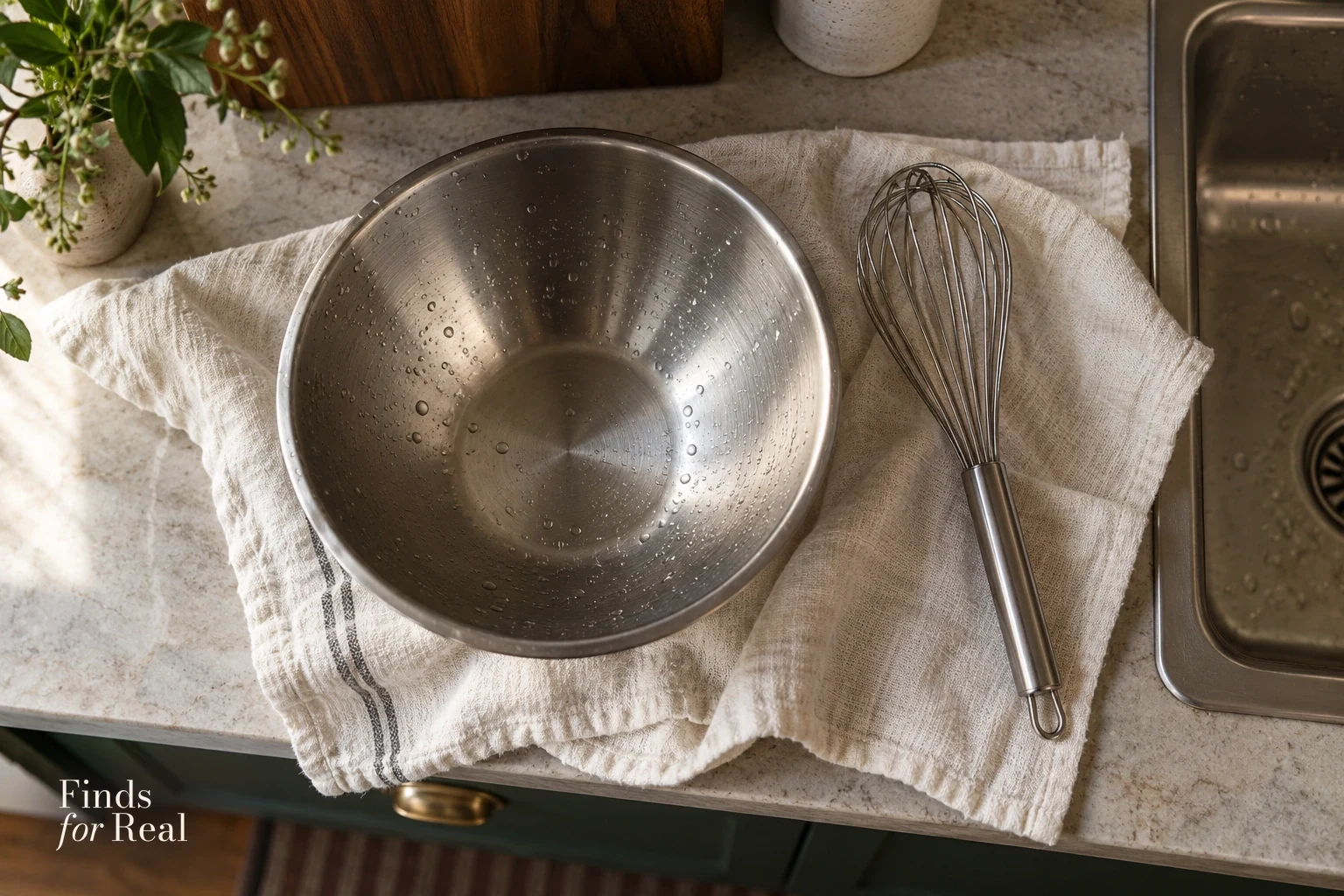
Drying: the chore that occupies space
Some maintenance creates a pause rather than a long session at the sink.
Dyson’s cordless-vacuum filter guidance calls for washed filters to dry for at least 24 hours and be completely dry before being reinstalled. It also directs owners to the instructions for their particular machine. This is vacuum-filter guidance; it should not be transferred to an Airwrap or another unrelated appliance.
The point is not that a vacuum has stolen a day of your life. You are not standing beside the filter with a stopwatch. The point is that a filter on a drying spot is temporarily unavailable for use, and “I’ll wash it just before I vacuum” may be a poor sequence.
Think about where cleaned components can dry without blocking the only useful work surface. A home with a generous utility area and a small kitchen with one drying rack will experience the same maintenance instruction differently. Neither household needs to be told it is doing convenience wrong.
Storage: include the trip back to the cupboard
The appliance’s footprint is only one part of the space it occupies. Consider the lid, bowl, cord, spare pieces and room needed to open or remove anything. A tidy product photo is unusually relaxed about these details.
If you use a machine frequently, a permanent counter position may make sense. If you have to move other things to reach it, assemble it, then reverse the process afterward, getting started becomes a chore of its own. Weight and reach matter too, particularly if lifting from a low shelf is uncomfortable.
Choose a home for the appliance before choosing extra accessories. Keep the parts you use together, follow any model-specific storage instructions, and avoid buying organizers to solve a storage problem you have not yet measured. The goal is a routine you can repeat on a tired evening, not a cupboard that photographs well once.

Replacing: remember the job that isn’t due yet
Some costs wait politely until the purchase has settled in. Before buying, find out which parts are washable, which are consumable, and what your exact model requires. A washable filter is not the same proposition as a disposable one. A maintenance alert is a prompt to act, not proof that the machine has done the job itself.
Coffee machines make the distinction clear. De’Longhi’s Dedica and Dedica Arte guidance says descaling frequency depends on water hardness. A universal calendar copied from somebody else’s kitchen can miss the point; use the instructions and prompts for your machine and the water you use.
Check that the required care products and compatible replacement parts are obtainable where you live. Record the model number somewhere retrievable. This does not require a household procurement department. It means future you should be able to identify the part without excavating an order history over breakfast.
Where the appliance still earns its place
Maintenance is a cost of convenience, not a verdict against it.
A machine may be worthwhile because it removes a task you find exhausting, makes a routine more manageable or helps you cook something you would otherwise avoid. Those benefits count even when there is washing afterward. For someone who finds sustained mixing difficult, the exchange can be especially valuable. Your hands do not have to be the cheapest available motor.
Frequency matters, but frequency alone is not the test. An occasional tool can be worth keeping for a job you particularly value. Equally, daily use does not make an irritating routine pleasant. Ask which burden disappears, which one arrives and whether you prefer the exchange.
Before you buy, follow one ordinary use all the way through
Choose a real task: your usual dinner, your normal baking session or the floor you clean most often. Read the cleaning section of the manual before the accessories section of the sales page.
Then walk through the complete sequence: get it out, prepare, use, empty, wash, dry, reassemble, store. Add the periodic care separately so that a monthly job does not masquerade as a daily one. Check the space the parts need while they are apart, not only when everything is neatly assembled.
Finally, compare that sequence with what you do now. If possible, notice your own active effort and interruptions rather than borrowing a stranger’s promised saving. No universal number can decide whether you hate scrubbing, enjoy baking or have room for a drying basket.
The right appliance does not have to eliminate every chore. It has to leave you with a routine you would willingly choose again. That is a more useful kind of time-saving—and a better reason to give something counter space.
Questions worth asking
Does dishwasher safe mean the whole appliance?
No. The instruction may apply only to particular removable parts. Check the exact component, material and rack instructions in the manual; keep the motorized body out of the dishwasher unless its manufacturer explicitly says otherwise.
Should drying time count as work?
Count it separately. It may take little active effort while still occupying space or delaying reuse. Both facts matter; they measure different things.
Does more maintenance mean it isn’t worth buying?
No. Judge the complete exchange against the task and method it replaces. Removing a difficult or tiring job can be worthwhile even when cleaning remains.